How to Investigate Biological Process Contaminations and Perform Risk Assessments
Microbial contamination is of great concern in pharmaceutical and biotech manufacturing. Failure to prevent contamination may result in financial loss, product recalls, and regulatory action (including Warning Letters, Consent Decrees, product seizure or loss of license). Many organizations struggle with determining the root cause of contamination when it occurs, and identifying effective safeguards to prevent future contaminations. Microbial contamination is of particular concern in biopharmaceutical and sterile product manufacturing.
This article will introduce a new model for understanding microbial contamination in biopharmaceutical and sterile products and processes. The “fire triangle” is a model used by the fire safety industry, which states that three things must be present for fire to occur: fuel, oxygen, and heat. If any one of these is missing, there will be no fire.
The “Contamination Triangle” is patterned after the “Fire Triangle,” and identifies the three factors necessary for microbial ingress into a sterile (or pure) system. The use of this model will provide guidance for contamination investigations, clarify the explanation of the contributing root causes in Non-Conformances, and assist in identifying risks and risk mitigation measures as part of a Failure Modes and Effects Analysis (FMEA) or other risk analysis method.
In principle, this model can be used to investigate any form of contamination resulting from the ingress of foreign material into any kind of process. This article will focus primarily on bacterial contamination of biological and sterile manufacturing processes.
Note: This method explains how bacteria can enter a sterile, aseptic, or pure system. The failure to fully sterilize a system before use is a separate cause of contamination not covered by this model.
Fire Triangle Example
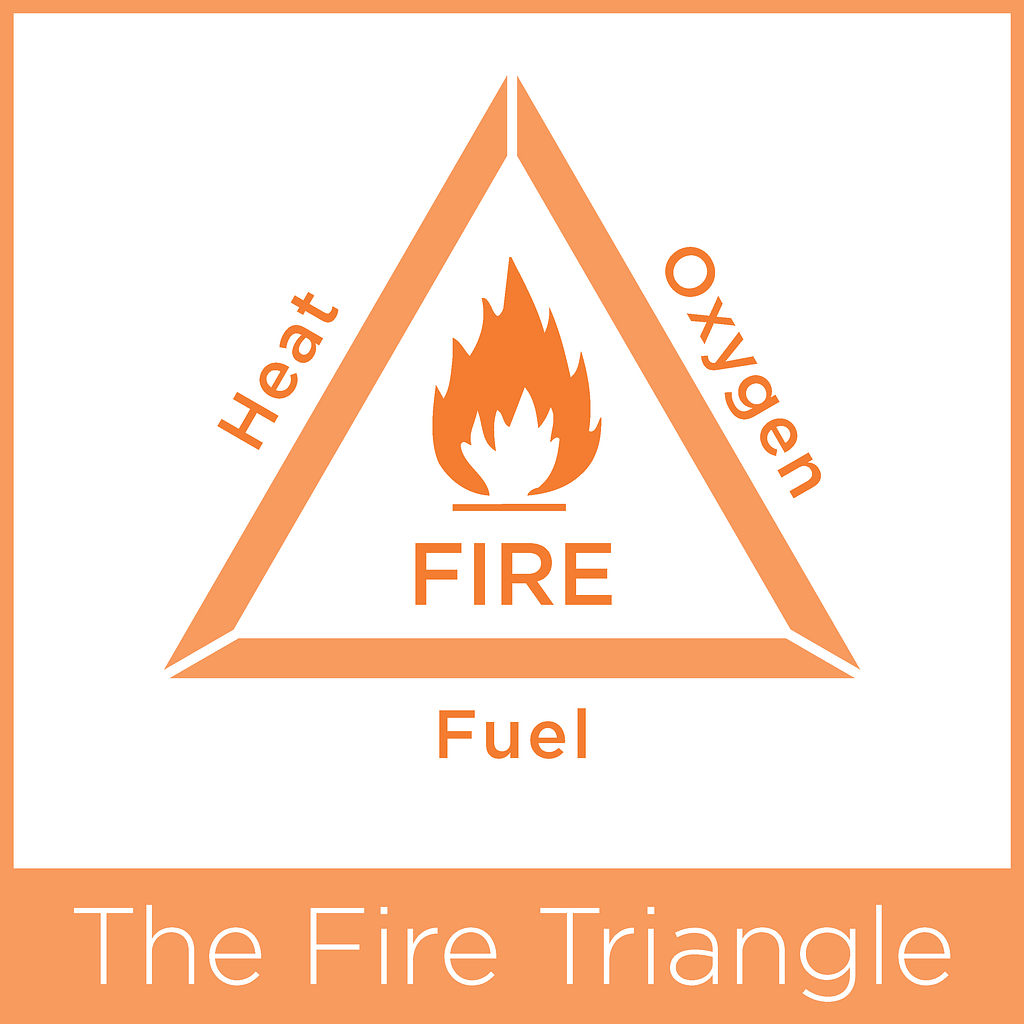
The atmosphere contains approximately 21% oxygen and paper (a fuel) is combustible. Yet paper only burns if it is exposed to a significant heat source, such as a lighted match. It takes all three to have fire.
Once a fire is started, the oxidation of the fuel releases heat, which keeps the fire going until it runs out of fuel or oxygen. But fires can be put out by cooling them with water, smothering them with CO2 (or another inert gas), or by taking away the fuel source. To prevent or put out a fire, you only have to eliminate one side of the fire triangle; any side will do.
The Contamination Triangle Explained
Three things are necessary to biologically contaminate a sterile or pure process: an organism, an opening, and an operative force.

The Three sides of the Contamination Triangle are:
- The Organism – The presence of a viable microbial organism in the environment
- The Opening – An opening into the process by which the organism may enter
- The Operative Force – A pressure differential or other force that moves the organism through the opening into the process
As in the fire triangle, all three conditions must be present in order to contaminate a sterile or pure process. Sterile filtration is based on this principle. Growth media may contain microbial contaminants, and the media may be forced through a filter with positive pressure, but as long as the membrane pore size is small enough and the filter is integral, there will be no opening for bacteria to pass through.
Fermentors and bioreactors can be operated without contamination even in outdoor environments surrounded by bacteria if the equipment is operated as a “closed” system. Aseptic filling and many other processes are open to the environment around them, so the environment is carefully controlled to exclude bacteria and the particulates that often harbor them.
Use of the Contamination Triangle in Contamination Investigations
Investigation teams often have difficulty identifying the root cause of a contamination. Sometimes they find it even harder to clearly explain the cause. The use of this model can help direct the investigation and clarify the write up.
Biological contaminations occur in one of two ways. Either one or more of the components were not sterile to start with (so the contaminating organism originated from within the system boundary) or an organism entered the sterile / pure system from outside the sterile boundary. While this model only addresses the second scenario, a thorough investigation should evaluate both possibilities.
When investigating the possibility of a contaminant entering the system from outside the sterile boundary, all three sides of the contamination triangle should be considered. When describing the root cause of a contamination, all three sides of the contamination triangle should be identified.
The Organism
The identification of the organism involved in the contamination has great value. In conducting criminal investigations, detectives consider the modus operandi (mode of operation) or MO of the criminal. Different types of organisms behave differently. One could say they have different MOs.
- “Water bugs” (usually gram negative rods) are commonly found in water systems or other wet locations, including condensate lines, drain lines, puddles in equipment, etc. Contaminations by “water bugs” are most often associated with leaks through boundary valves from process or drain piping.
- “People bugs” (often gram positive cocci like staph, micrococcus, and strep) are commonly found on the skin or mucous membranes of people. Contaminations by “people bugs” are usually associated with aseptic manipulations during open process steps.
- “Spore formers” (like Bacillus) are common environmental contaminants, but the spores are resistant to heat and disinfectants. Bacillus spores are the most common organisms involved in contaminations due to inadequate steam sterilization. Because they are so common in the environment, they may also be involved in contaminations of open processes or leaks into “closed” processes.
- “Molds” are commonly associated with wet environments (e.g.: water damaged dry wall). Unlike bacteria that reproduce by dividing, molds and other fungi can also release spores into the air like seeds from a dandelion. This can result in high airborne viable samples while the main colony remains hidden in a location that is not routinely cleaned.
Contamination investigations should identify the contaminating organism, where it is found in the manufacturing environment, and the most likely way(s) for it to get into the process.
The Opening
In order for an organism to contaminate your process or equipment, it must have a way in. Aseptic processes are routinely open, but even processes that are considered “closed” may be opened at times for some process steps.
Common openings include:
- Open processes – Some process steps like filling vials, inoculum preparation in flasks, roller bottle operations, etc. are inherently open. These depend on clean environments and good aseptic technique to prevent microbial ingress.
- Leaking valves – There are a variety of reasons why a valve may leak, including improper assembly, loose bolts, diaphragm damage, an improperly set travel stop, etc. Sterile boundary valves are of particular concern.
- Leaking seals – Most process equipment (including disposables) contain a variety of seals, designed to maintain an integral boundary between the inside and outside environments. Seals may include:
- Gaskets of various kinds (like Tri-Clamp or flange gaskets)
- O-rings
- Septum/Fitting connections (e.g.: hose barbs with tie-wrap)
- Mechanical seals – Tank agitators and pump shafts often have mechanical seals
- Defective sterile tubing welds
- Filter integrity failure – This may result from a defective filter or a leak path around the membrane. It should be noted that a single 1-micron defect could allow contaminants to pass, but most integrity tests would be too insensitive to detect this failure. Where sterility assurance is critical, adding a second filter in series would reduce the risk of this failure mode.
- Compromising the sterile boundary by sequence of operations – The opening of sterile boundaries must be carefully controlled. Ideally the outer environment will be sterile before opening it to the process. It is possible to control an opening between the sterile (or pure) system you need to protect and a non-sterile system, if positive flow from clean to unclean is maintained for the entire time the sterile boundary is open. It is important to never deadhead the flow path on the non-clean side while the sterile boundary is open. The sterile boundary valve should always be opened last and closed first.
- Cracks in vessels or other mechanical boundaries – While less common, leaks between the process and temperature control jackets or casings can occur or other metal pressure vessels. Leaks can also occur in areas of stress or wear when the process and the outside environment are not isolated.
Contamination investigations must identify the opening through which the contaminating organism got into the process.
The Operative Force
In order for an organism to move through an opening and contaminate the process, there must be some kind of force to move it through the opening.
- Positive pressure pushing – This force applies during the transfer or filtration of any liquid or gas into your process. This force can occur at boundary valves when steaming or cleaning a connected system (e.g., a transfer line).
- Overrated filters – HEPA filters are generally rated at 99.99 percent efficient at filtering 0.3-micron particles. The higher the DOP test percent may still make it through. Liquids like thin acid are sufficient to penetrate microbial level. If filters start breaking or held by just filter rings, it may block the filter during use, but some things may make it through the filter.
- Water Hammer – This is a short duration, high intensity sub-case of the positive pressure scenarios. Slugs of water or other liquids can move through otherwise empty lines at high speed. The mass of a fast moving liquid with high energy momentum, when forced into that momentum can transmit a huge impulse force on the access, valves, elbows, or other equipment when the flow of the liquid changes direction or is obstructed. This is most commonly experienced with steam moving through steam lines. It is also typical for hot acid or condensate, CIP fluid, or some aqueous processes with high velocity or high velocity at the barrier/boundary valve at the initiation of steaming or CIP. This is hard to control, but makes one of the most commonly tagged causes of leak paths on closed piping.
- Negative pressure pulling
- As vacuum conditions break into the liquid side. Strong liquid holdback force from tank drain lines, filter housings due to either reactor or vacuum tank vent design, or room draw can be introduced when a vacuum-assisted gas purge system is engaged. The problem sometimes comes from bag collapse/rupture when terminal sterile processing occurs during cool down following equipment sterilizing. This is especially true of Bio-SIPs where focused on sterilant or air gaps in many head tanks. Cooling of liquid or gas in a sealed container can result in partial vacuum.
- Some processes, like vacuum drying, intentionally pull a vacuum as part of the process.
- Mechanical – Mechanical devices that touch multiple things can transfer contamination from one to another. This is especially true of things like fill nozzles and pipettes that may be used to transfer liquids in or out of multiple containers.
- Air Flow – Bacteria and mold spores can be carried along by air currents, particularly if they are attached to particulates. Turbulent air can more in very unexpected ways. This is primarily addressed with air preparation and unidirectional air flowing through the use of HEPA filtration and unidirectional air flow. Even in controlled environments with directional flow, anything that causes turbulence at air returns or under hood openings can act like a fan or wind storm. When unidirectional air hits a surface (e.g., hands, equipment, supplies, or the inside of bags and open bottles) it will turn. It is knocked about until it is pushed or drops.
- Human Hands – It is commonly known that people are the largest source of contaminants in most cleanrooms. We wash and shed flakes of skin, we carry many environment organisms on our skin, and clothes, and in our hair. Our hands often touch rooms primarily to open and close, and we can’t sanitize gloves every time. Many companies use barrier gloves to reduce contamination, but gloves are comparative cleanliness level (clean gloves) but touching something contaminated.
- Biological Activity – In some cases, the biological characteristics an organism can contribute to moving it through the space:
- Motility of flagella – The ability of many bacteria can be as little as 20 microns. As facultative motility externally, the space becomes very tiny compared with a HEPA membrane. Many bacteria have flagella or creeping movements like amoeba that can help them “swim across” small distances – even through the edge of a leak path or process called “biofilm break.” More mobile bacteria can survive in gaps of <100 microns between two joining metal surfaces and create a path. Microbes can sometimes grow or swim through a surface break or lap seam if the conditions are moist and warm. Even if dry, their motility helps them to look for a warming through path. (Biofilm of heat, moisture and oxygen → motility.)
- White bacteria carried even against a strong pushout thru a 5-micron, rated air filter – The biological motility of the bacteria along the filter media and air velocity differences (e.g., particles and sample test help microbes often “slide” or through a media track) such as slight gap of media in a damaged channel.
Contamination investigations must identify the operational force that could have moved the contaminating organism through the opening into the process.
The Use of the Contamination Triangle in Risk Analysis and Mitigation
The Contamination Triangle model can be used to help evaluate the probability of contamination and identify ways to reduce that risk.
FMEAs, HAZOPs, and other methods are often used to analyze risks and identify ways to reduce those risks. Those methods usually analyze and score the risk in terms of severity, likelihood, and detectability. They then assign Risk Prioritization Numbers (RPN) by multiplying the three scores.
Biological contamination is generally considered to have high severity. Anything that can be done to identify and eliminate leaks before they cause contamination would lower the overall RPN by improving the detectability score. The Contamination Triangle model can be used to help evaluate and address the “Likelihood” component.
Calculating the Risk – In this model, there are three risk or probability factors: the likelihood of a viable organism being present, the risk of having an opening large enough for an organism to pass through, and the probability of having an operational force sufficient to move an organism through an opening. Since all three risk factors must be present simultaneously, the probability of contamination for a given operation can be calculated by multiplying the probabilities of the three risk factors.
Another factor that can affect the probability of contamination by a given activity is how many times that activity is performed. If an activity is done more than once, then the frequency or number of occurrences must also be factored in. For example, the probability of contaminating a Bioreactor during sampling might be estimated as once every 2,000 samples (0.05 percent per sample). If the Bioreactor is sampled 20 times per lot, then the statistical probability of contamination occurring during sampling for any given lot would be 20 samples per lot x 0.05% per sample = 1 percent per lot.
In doing this calculation, the probabilities should be written as decimals (e.g.: 1% = 0.01). For example, if all three risks were estimated to be 10%, then the total risk would be 0.1 x 0.1 x 0.1 = 0.001 = 0.1 percent. This might be considered a fairly low risk if it is the probability per lot. If this is the probability per operation and that operation is done 50 times per lot, then the risk per lot would become 50 x 0.1% = 5%.
- The Organism Risk – This is the probability of an organism being present. For example, during the filtration of a non-sterile liquid, the probability of having an organism should be considered 100% (or 1) because the liquid is expected to contain microorganisms.
- The organism risk is often a subjective estimate of the probability. For example, if ungowned people are processing in an uncontrolled environment, the probability of an organism being present would be high, and might be estimated as 98% (or 0.98). This risk in a classified area would depend on the gowning and aseptic behavior of the people, and the ISO class rating of the location. It might be estimated as 25% (0.25) for operations with non-sterile gowning in an ISO-8 room. It might be rated as 0.1% (0.001) with good aseptic technique and sterile gowning in an ISO-5 hood. The risk / probability of an organism being present should never be considered zero.
- The Probability of an Opening – For open processes like filling and aseptic processing in hoods, the probability of an opening should be considered 100% (or 1). For a hermetically sealed vessel with no transfers in or out, the theoretical probability would be zero. Even equipment that is considered “closed” will have some finite probability of a leak depending on maintenance, operations, etc. Historical performance and observation may be the best way to estimate this. A probability of 1% (0.01) might be reasonable for nominally “closed” systems.
- Operational Force Risk – In some cases, the probability of an operational force that could move a contaminant through an opening could be 100%, as in a sterile vacuum drier. Bioreactors and sterile process vessels are often kept pressurized with sterile filtered gases to ensure any leakage is out, so the operational force risk would be low. In this case, it might be tempting to call the risk zero. Forces can be time, operation, and location dependent though. For example, there could be a positive pressure differential across a sterile boundary valve into a bioreactor during a line CIP or the steaming of a hard pipe.
- Frequency of Occurrence – This is the multiplier for how many times a specific opening or situation occurs. This could be 20 samples, 50 sterile tubing welds, 5 add port SIPs, etc.
Reducing the Risk – While minimizing each of the above risks might be desirable, the goal is to minimize the total risk. If the probability of any one of the three contamination factors can be reduced to zero then the total risk becomes zero. If none of the probabilities can be reduced to zero, then it would be best to minimize the probability of at least two of the risk factors.
Conclusion
This article introduced a new model for investigating biological contaminations and evaluating the risk of it occurring. The model is called the Contamination Triangle. It is similar to the Fire Triangle, in that three factors must all be present simultaneously in order for an organism to contaminate a sterile or pure process. The three sides of the Contamination Triangle are: The Organisms, The Opening, and The Operational Force.
The likelihood of a contamination occurring during an operation is the product of the probabilities of each of the three risks multiplied by the number of occurrences for the operation being evaluated. The statistical nature of these risk factors and the resulting probabilities of contamination can lull people into a false sense of security when things are going well and baffle them when contamination does occur. So the next time you have to investigate a contamination, or perform a risk assessment related to contamination, remember the Contamination Triangle.
NOTE: This article was first published in BioProcessing Journal, Vol. 15, Issue 1 (Spring 2016) as:
The Contamination Triangle: A New Model For Assessing the Risk of Biological Process Contamination and Performing Investigations by BW Ogden © 2016 BioProcessing Journal
Republished with Permission
Citation:
Ogden B. The contamination triangle: a new model for assessing the risk of biological process contamination and performing investigations. BioProcess J. 2016; 15(1): 49–53. https://dx.doi.org/10.12665/J15.Ogden.
Posted online April 7, 2016.